Choose the decision pattern that feels closest to your current problem.
Each page below focuses on a specific scenario, but the real value comes from using one consistent system instead of rebuilding context every time.
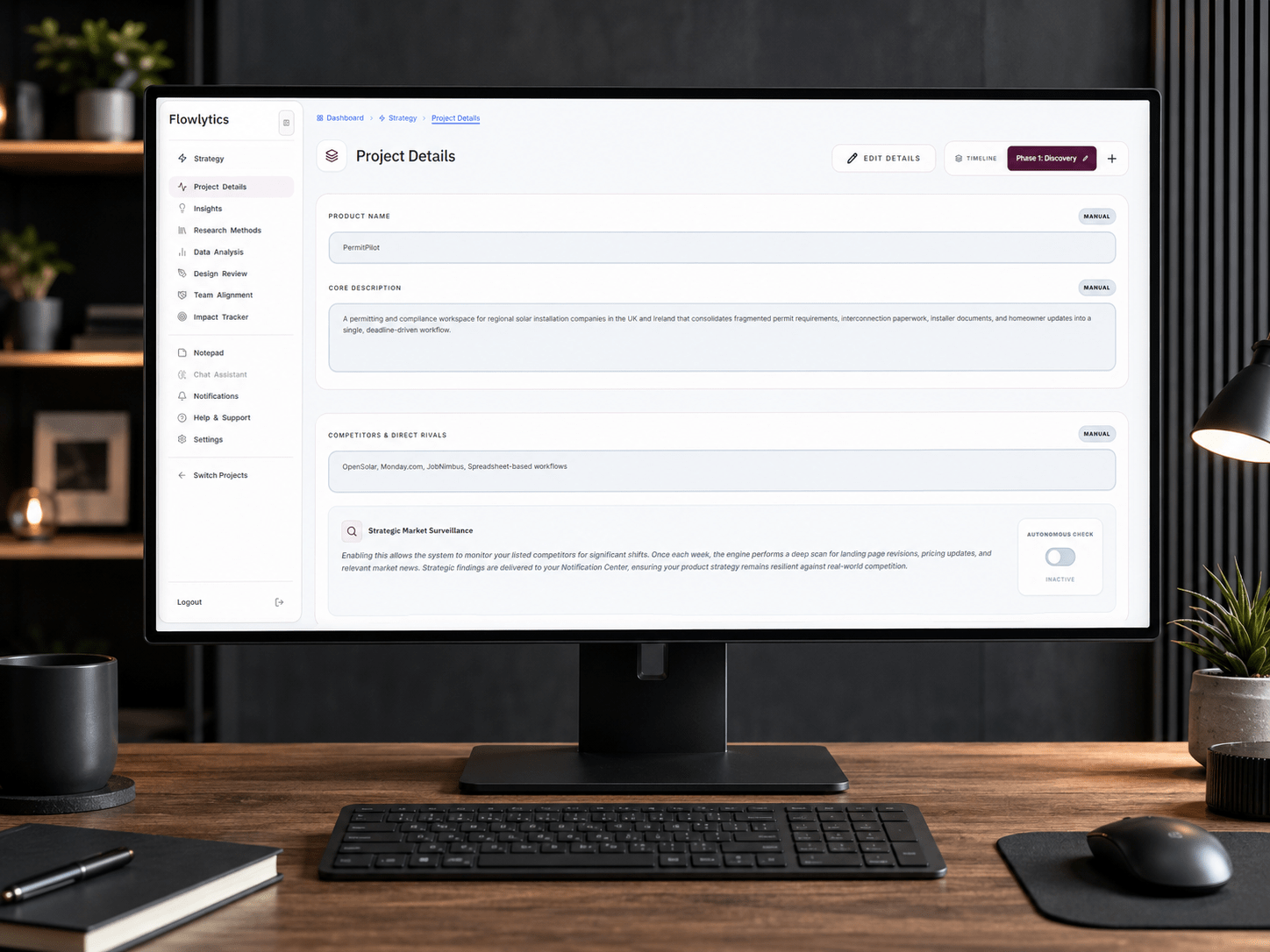
Product discovery
Turn a loose problem area into a clearer product question with evidence that can survive stakeholder pressure.
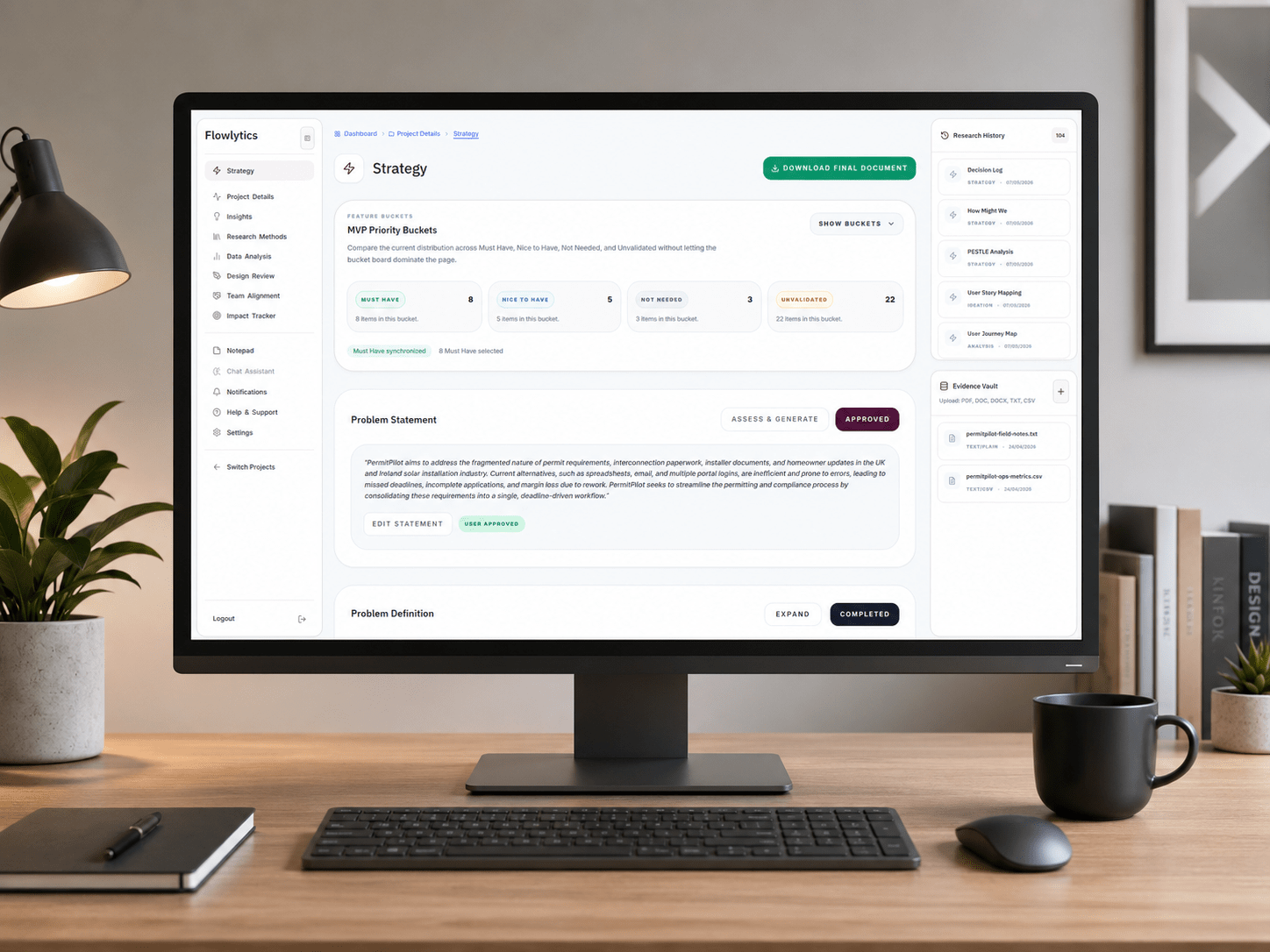
Feature prioritisation
Pressure-test feature demand against product context, strategic goals, and the signals that actually matter.
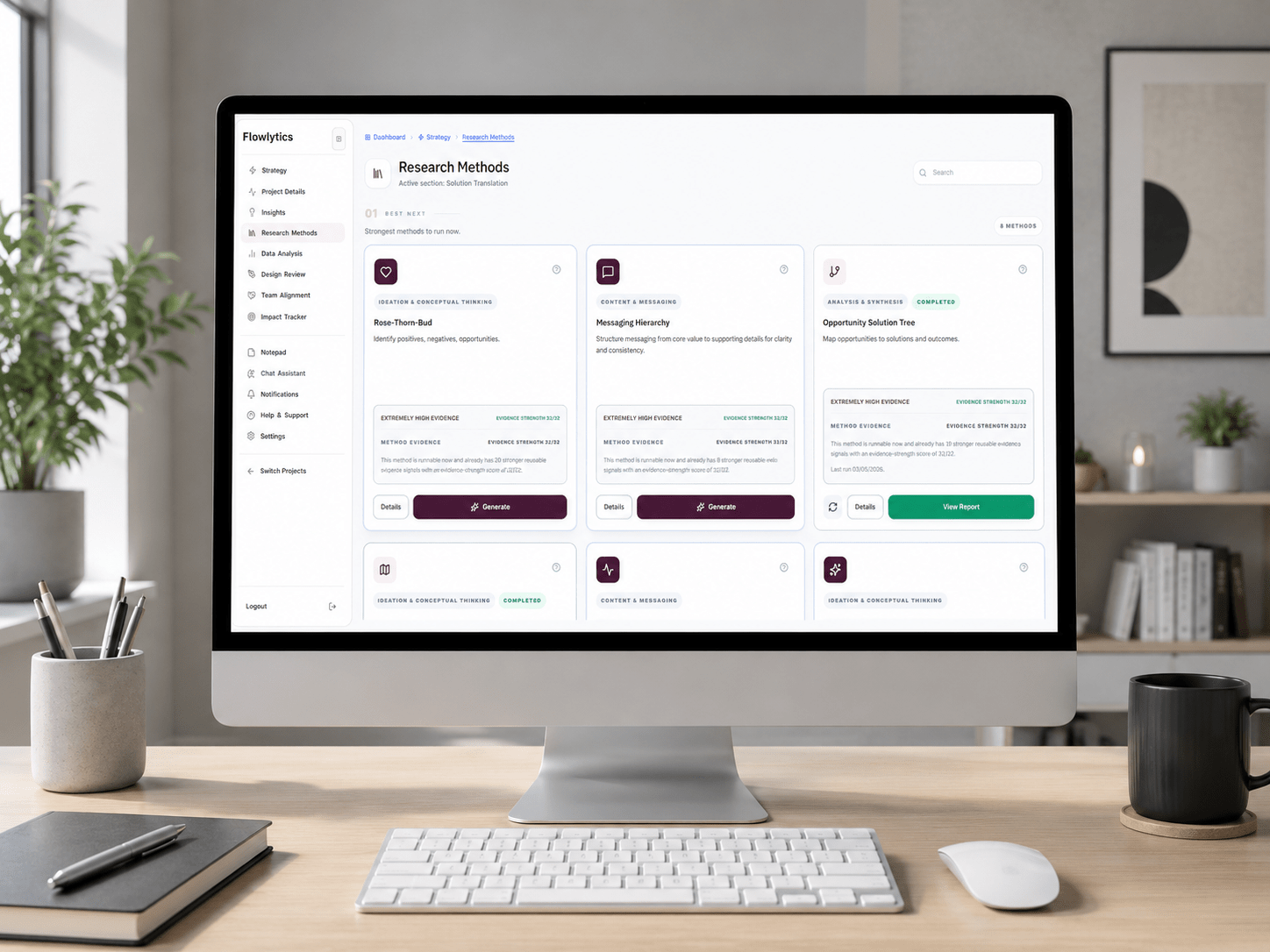
Competitor research
Use market evidence to sharpen a product decision, not just to collect a deck of comparisons nobody reuses.
The workflow stays consistent even when the question changes.
That consistency matters because teams do not usually fail from lack of activity. They fail because framing, evidence, reasoning, and recommendation all live in different places at the exact moment a decision needs to be made.
Frame the decision
Start from the exact product question instead of opening another blank workspace with no shared frame. That gives the team a clearer decision boundary before requests, opinions, and urgency start pulling in different directions.
Connect the proof
Bring research, stakeholder context, market pressure, and team assumptions into one visible body of reasoning. Instead of scattering inputs across decks, docs, and meetings, the logic stays inspectable in the same place as the evidence itself.
Move into direction
Leave with a usable recommendation, not a disconnected set of notes that needs to be interpreted again later. The outcome is easier to trust because the recommendation, the reasoning, and the supporting proof still travel together.